

Best Trick to Remember Current Affairs for CLAT
If you’ve ever wondered how to remember current affairs for CLAT without forgetting everything a month later, you’re asking the right question at the right time. Most CLAT aspirants aren’t struggling because they read too little news. They’re struggling because they’re reading the wrong way, skimming headline after headline and hoping the information sticks. Current affairs is one of the highest-weightage and most unpredictable sections of CLAT, and figuring out how to remember current affairs for CLAT properly can genuinely be the difference between a good score and a great one.
The good news is that memory for current affairs isn’t about brute force repetition. It’s about how you process information the first time you encounter it. This article walks through the tricks that actually help CLAT aspirants retain months of news, judgments, and events well enough to recall them accurately on exam day.
Why Current Affairs Feels So Hard to Remember for CLAT
Most students treat current affairs like a checklist: read the news, tick it off, move to the next story. The problem is that isolated facts, a bill’s name, a summit’s location, a judgment’s date, have almost nothing for your brain to hold onto. Without context connecting one fact to another, information fades within days, which is exactly why learning how to remember current affairs for CLAT starts with understanding why the usual method of reading fails in the first place.
CLAT doesn’t test current affairs the way a quiz show does either. The exam typically presents a passage built around a news event and asks you questions that require understanding the situation, not just recalling a fact in isolation. This means the goal of your preparation shouldn’t be memorising headlines. It should be genuinely understanding events well enough to recognise them in a completely different framing during the actual exam.
Trick 1: Convert Every News Item Into a Mini Case Study
One of the most effective ways to remember current affairs for CLAT is to stop noting down headlines and start unpacking every important news item using three simple questions: what actually happened, what led up to it, and why it matters going forward. This small shift changes an isolated fact into a connected narrative your brain can actually hold onto.
Take a Supreme Court judgment as an example. Rather than memorising just the case name, dig into the actual dispute that brought the case to court, the legal principle the bench was interpreting, and what the ruling changed or clarified going forward. A case name attached to a story is far easier to recall than a case name floating on its own with nothing attached to it.
This approach takes slightly longer per news item, but it pays off enormously during revision, since you’re recalling a coherent sequence of events rather than trying to dredge up a disconnected fact from memory.
Trick 2: Connect Every Current Event to Its Static GK Foundation
Current affairs rarely exists in a vacuum. A new economic policy connects to broader concepts in the Indian economy. A Supreme Court ruling connects to specific constitutional articles or earlier landmark judgments. A new bill connects to the legislative process and the branch of law it falls under.
When you deliberately link a fresh news item to the static knowledge behind it, you’re building two memory pathways instead of one. If you happen to forget the specific news event, the static concept can often help you reason your way back to the answer, and vice versa. This is also why treating static GK and current affairs as two completely separate subjects is a mistake many aspirants make. If you want a deeper breakdown of how these two actually work together rather than against each other, our guide on static GK versus current affairs for CLAT is worth reading alongside this one.
Trick 3: Write Notes in Your Own Words, Never Copy-Paste
It’s tempting to simply screenshot a news summary or copy a pre-made compilation point for point, but notes written this way rarely stick, because your brain never actually processed the information deeply enough to put it into new words. The physical or digital act of rephrasing a news story yourself forces your brain to genuinely understand it first, which is exactly what makes it memorable later.
Keep these notes short. A few lines per news item, written in plain language you’d use to explain it to a friend, works far better than a lengthy, copied paragraph you’ll never actually reread. Many aspirants find that maintaining small, dated flashcards or a simple notebook divided by month makes weekly revision dramatically faster than flipping through bulky compiled PDFs.
Trick 4: Read the Story Behind the Headline, Not Just the Headline
Skimming brief news updates gives you a fact without context, and facts without context are the hardest thing for your brain to retain. Spending a little more time reading a well-written editorial or an in-depth article on a major story, rather than a two-line news brief, gives you the background, the different perspectives involved, and the eventual outcome, all of which anchor the fact far more firmly in memory.
This doesn’t mean you need to read every editorial published every day. It means picking the handful of stories that matter most each week, the ones most likely to show up in a CLAT passage, and genuinely understanding them rather than rushing past them.
Trick 5: Build a Weekly and Monthly Revision Cycle
Reading news once is never enough for long-term retention, no matter how well you understood it the first time. Memory fades naturally over time unless it’s reinforced through spaced repetition, revisiting the same information at increasing intervals. This is arguably the single most important habit behind knowing how to remember current affairs for CLAT over an entire year of preparation.
A simple and effective cycle looks like this: do a quick review of the week’s major news every weekend, condensing your daily notes into a shorter weekly summary. Then, at the end of each month, revisit that entire month’s summary in a single sitting, trimming it down further to only the stories with lasting significance. By the time exam season arrives, you’ll have several rounds of revision behind each major story instead of a single, fading first impression.
Trying to revise everything for the first time only in the final weeks before CLAT is one of the most common reasons aspirants feel overwhelmed and forget large chunks of the year’s news. A steady, ongoing revision cycle prevents that backlog from ever building up in the first place.

Trick 6: Practice Current Affairs Through Passage-Based Questions
Since CLAT tests current affairs primarily through reading passages rather than direct factual questions, practising with actual passage-based questions trains your memory in the exact format you’ll face on exam day. This is different from simply reading news and hoping you’ll remember it, since answering questions forces active recall, which is a far stronger memory tool than passive reading.
Make it a habit to solve current affairs passages regularly through mock tests, not just in the final weeks before the exam. Every time you get a question wrong, go back and understand exactly which part of the underlying story you missed, since this targeted correction is often more valuable than reading ten new, unrelated news items. Our detailed guide on the CLAT exam syllabus breaks down exactly how much weight current affairs carries within the overall exam, which is useful context for deciding how much daily time to dedicate to this section relative to others.
Trick 7: Prioritise Legal, Constitutional, and Policy News
Not all news carries equal weight for CLAT. Given the exam’s legal orientation, stories involving new bills, constitutional amendments, Supreme Court and High Court judgments, and major government policies deserve noticeably more attention and deeper understanding than, say, sports results or entertainment news, which rarely feature meaningfully in the exam.
This doesn’t mean ignoring other categories entirely, since CLAT does occasionally draw on a broad range of topics, but it does mean allocating your limited time and mental energy strategically. When you’re short on time on a particular day, prioritise reading and understanding the legal and policy stories thoroughly over skimming everything else superficially.
Trick 8: Turn Judgments and Policies Into a Narrative, Not a Data Dump
A judgment or policy update crammed with dates, section numbers, and technical terms is genuinely hard to remember as a list of disconnected details. Reframing it as a story instead, essentially a sequence of cause and effect, makes an enormous difference. Something happened, which led to a dispute or a need, which led to a court or the government stepping in, which led to a specific outcome that changed something going forward.
Human memory is naturally wired to remember narratives far better than raw data points, which is exactly why turning dry legal updates into a simple story sequence, in your own words, tends to outperform any amount of straightforward memorisation.
Trick 9: Explain What You Learned to Someone Else
One of the most underused memory tricks among CLAT aspirants is simply explaining a news story out loud to a friend, family member, or study partner, without looking at your notes. If you can explain a Supreme Court judgment or a new policy clearly and accurately from memory, you genuinely understand it. If you stumble or realise you’re missing pieces, that gap tells you exactly what to revisit.
This technique works because teaching forces you to organise information logically and fill in gaps in your own understanding, both of which strengthen memory far more than silent reading ever could. Study groups that spend even fifteen minutes a week quizzing each other on recent news tend to retain far more than students who only read solo.
Trick 10: Maintain a Rolling Monthly Timeline
Keeping a simple, chronological timeline of major events, whether digital or in a physical notebook, gives your brain a mental map to place new information onto. When a new story breaks, you can quickly connect it to what came before it, which reinforces both the new item and everything already linked to it on your timeline.
This is particularly useful for ongoing stories that develop over several months, such as a bill moving through Parliament or a court case progressing through multiple hearings. Instead of treating each update as a brand-new, disconnected fact, a timeline lets you see the full arc of the story, which is dramatically easier to remember and far more useful if CLAT asks about the broader context rather than just the latest development.
Bringing It All Together: A Daily Habit for Remembering Current Affairs for CLAT
None of these tricks work as a one-time fix. The real value comes from applying them consistently, day after day, so that by the time your CLAT exam arrives, you’ve built months of layered understanding rather than a rushed, last-minute cram. Start small if you need to. Even committing to the three-question method for just the top two or three stories each day is far more effective than superficially skimming twenty headlines without retaining any of them.
If you’re unsure how much of your daily study time should go toward current affairs versus the exam’s other sections, structured guidance can help you strike the right balance without letting one section eat into your preparation for the rest of the exam.
How CLATapult Helps You Master Current Affairs for CLAT
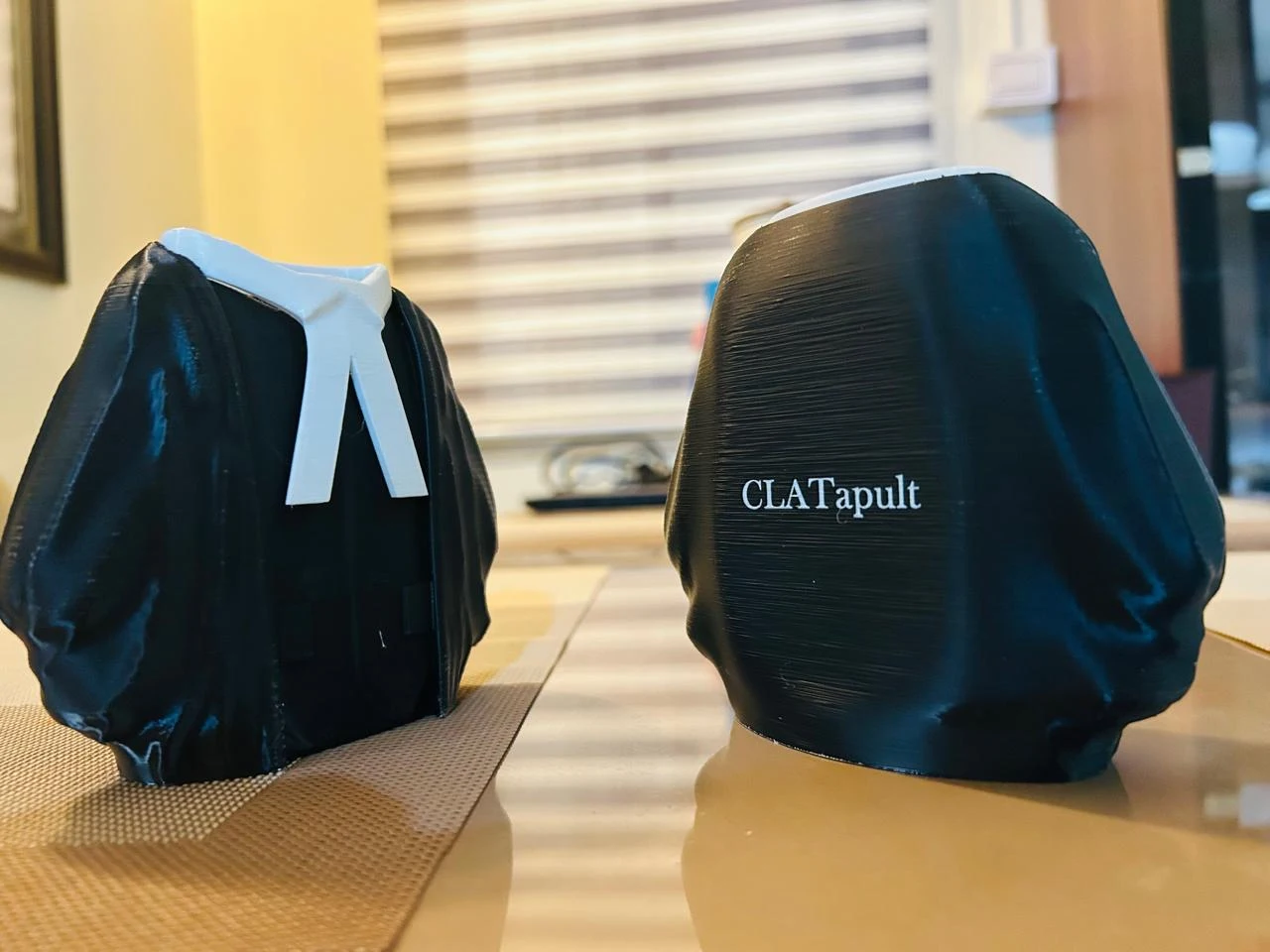
At CLATapult CLAT Coaching Kolkata, current affairs preparation isn’t an afterthought bolted onto our courses, it’s a core part of how we train students. Our monthly current affairs magazines are built specifically around the kind of context-driven understanding covered in this article, connecting dynamic news to the static legal and constitutional concepts CLAT actually tests. Combined with regular mock tests featuring passage-based current affairs questions and mentorship from faculty who are themselves NUJS Kolkata students who cracked CLAT, we help students build the kind of layered, lasting understanding that survives all the way to exam day, not just the week it was first read.
As Eastern India’s number one ranked CLAT coaching institute for over nine years, we’ve seen firsthand how much of a difference the right approach to remembering current affairs makes to a student’s final score. Explore CLATapult’s CLAT coaching courses to see how our structured current affairs material can strengthen this crucial section of your preparation, or book a free demo class today to experience it firsthand.
Frequently Asked Questions on How to Remember Current Affairs for CLAT
How to remember current affairs for CLAT without forgetting everything later?
The most effective way to remember current affairs for CLAT is to move away from memorising isolated headlines and instead understand the full context behind each news story, including what happened, why it happened, and why it matters. Reinforcing this understanding through weekly and monthly revision cycles prevents the information from fading over time.
What is the best method to remember Supreme Court judgments for CLAT?
Rather than memorising just the case name, understand the underlying dispute, the legal principle the court examined, and what the final ruling actually changed or clarified. Connecting the judgment to relevant constitutional articles or earlier landmark cases makes it significantly easier to recall during the exam.
How often should I revise current affairs to remember them for CLAT?
A weekly and monthly revision cycle works best. Reviewing the week’s major stories every weekend, followed by a condensed review of the entire month at its end, prevents the kind of backlog that makes last-minute revision overwhelming closer to the exam.
Should I focus on newspaper headlines or editorials to remember current affairs for CLAT?
Editorials and in-depth articles generally help far more than brief news headlines, since they provide the background and context needed for genuine understanding, which is exactly what CLAT’s passage-based current affairs questions test.
How is current affairs tested in the CLAT exam?
CLAT typically presents current affairs through reading passages rather than direct one-line factual questions, requiring candidates to understand the context and significance of an event rather than simply recall a headline or date.
Is it necessary to read current affairs every single day to remember them for CLAT?
Yes, consistency matters far more than occasional long reading sessions. Reading and processing a smaller number of important stories every day, using techniques like the three-question method, builds retention far more effectively than sporadic, last-minute cramming.